

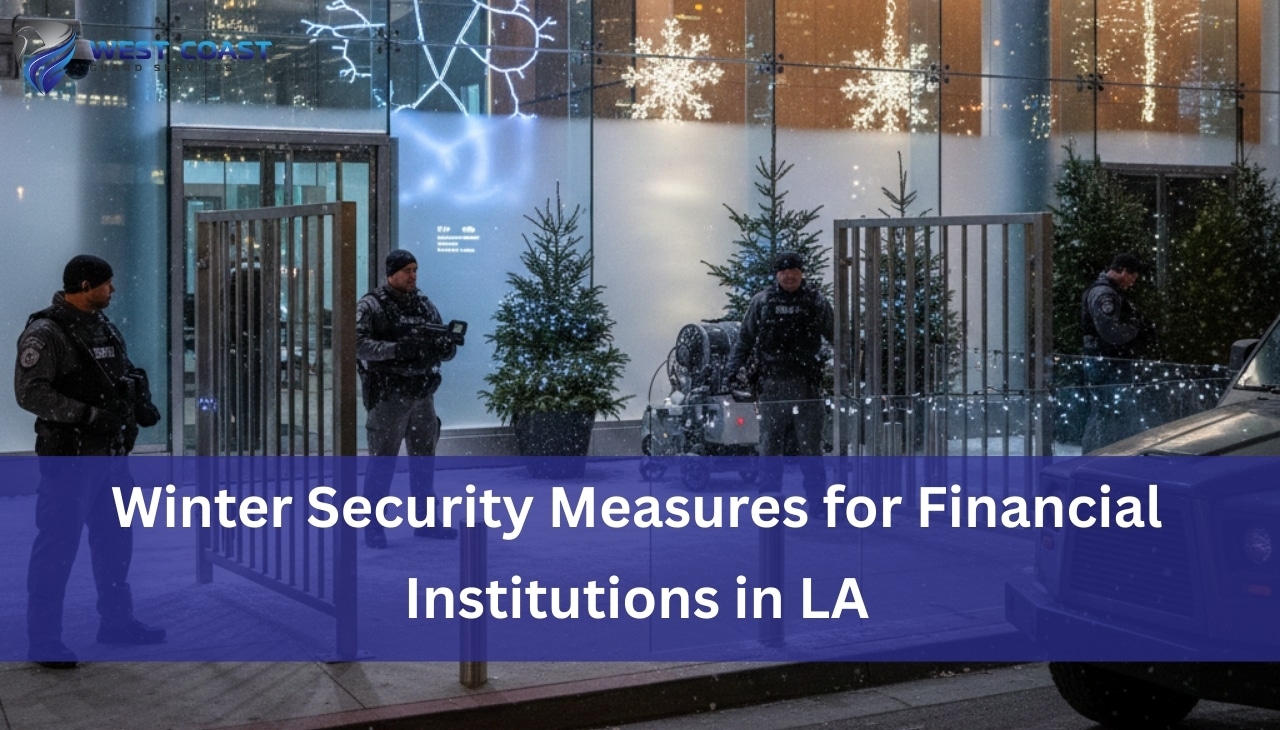
Even in a city like Los Angeles, with mild weather, winter is a challenge for financial institutions. Snowfall is rare; however, banks face winter risks such as early sunsets, wet floors, heavy rain, and increased holiday foot traffic. Such circumstances only improve the importance of safety and security.
As there is uncertainty about winter weather, it is necessary to enhance the security of financial institutions during the winter season.
Basic planning will ensure the safety of customers, employees, and business activities during this high season. Professional bank security guards will be deployed to ensure that financial institutions’ winter security measures are implemented year-round.
The importance of Winter Security in Financial Institutions in LA
Los Angeles is unlikely to be hit by severe snowstorms; however, winter does pose some actual security problems. Bank entries, drive-ins, and parking lots may be exposed to risks in rain, wind, fog, and darker nights.
Early sunsets will reduce visibility, so surveillance and patrols will be vital. Moreover, the Christmas season makes customers more likely, thereby increasing the likelihood of theft attempts and suspicious behavior.
Wet floors also lead to slips, which may involve the customers and employees. All these reasons make financial institutions remain vigilant. They can avoid delays, prevent incidents, and maintain a secure environment during the winter season with proper security planning.
Winter Risk to Banks and Financial Buildings
Winter conditions may pose operational and safety challenges for banks. Reducing lighting in the early evenings exposes exterior areas to greater vulnerability. Rains cause wet floors, which pose a slip risk in lobbies.
Icy paths in the surrounding higher areas can also pose dangers for customers using ATMs or night-deposit boxes. Also, banks can be affected by seasonal power cuts during storms, interrupting alarms, cameras, and operations.
Crimes made during the holiday season, including ATM tampering or impersonation, also increase at this time.
Customers are highly dependent on financial institutions, and addressing these risks keep them safe.
Critical Winter Guide to Bank and Credit Union Security
The institutions should enhance bank winter safety and security against winter weather conditions to be prepared. This involves revising seasonal procedures and informing relevant personnel of winter risk response procedures.
A bank security guard is also particularly important, as he/she regulates the flow of people, monitors points of entry, and identifies potential threats quickly. Some of the effective measures could be as follows:
- Modifying winter security operations to suit the season.
- Employee education on hazards and emergencies.
- Improving the level of communication between the security teams and the management.
- Investigating the exterior environment daily to ensure customer safety.
These measures would facilitate the provision of a safer environment and minimal seasonal disturbances.
Outside Winter Perimeter and Safety
Winter risks usually start in the exterior areas. Rainwater and slippery walkways, as well as low visibility, are experienced even though there is no heavy snowfall in LA.
Effective perimeter security for banks during winter enhances security around parking lots, ATMs, and sidewalks. Banks ought to emphasize that, to maintain high protection.
- Removing water accumulation from exits and walkways.
- Having more patrols in parking lots during the evening hours.
- Checking slippery floors around the drive-through and ramps.
How to confirm that the walkways are bright
These measures enhance snow and ice risk assessment in banking and minimize customer accidents.
CCTV, Winter Lighting, and Surveillance Upgrades
Days of shorter length become a significant issue for visibility. Dark light can affect the activity being photographed, particularly when the camera is covered with fog, rain, or condensation. To resolve such problems, banks ought to improve winter lighting and surveillance of financial buildings. This can include:
- Increasing the camera to low-light or thermal settings to improve clarity.
- Maintenance of the outdoor cameras should be more often.
- Enhancement of lighting in the parking lot and around the ATMs.
- Fitting motion lights as a way of saving energy.
The institutes will need clear communication strategies, emergency contacts, and backup power or security systems. Winter emergency planning is effective and involves:
- Having a backup power source for cameras and alarms.
- Revising emergency contacts and communication channels.
- Making response plans in case of equipment breakdown or failure.
- Organizing exercises to familiarize staff with emergency roles.
Financial Institutions Holiday Season Security
The banks experience increased customer volume and cash flow during the holiday season. These situations appeal to criminals who break into ATMs, target customers, or use unsecured entry points.
Financial institutions must maintain security over the holidays, which are considered crucial in these months. A bank-certified security guard will assist in managing the flow of people, detecting suspicious activity, and responding more quickly to any incident.
Conclusion
Even in a moderate climate like LA, winter safety should not be neglected. Vigorous winter security protocols in financial institutions help banks protect their clients, employees, and operations during the season. Finally, proactive action will preserve faith, security, and efficient business throughout the winter.
Employment of trained winter security personnel is more effective. The security teams that deal with cold-weather security regulations in the financial institutions know how to handle seasonal risks.
They assist in the surveillance, perimeter screening, customer security, and readiness. By having a trusted security ally in LA, banks will learn to minimize downtime, better prepare for winter, and maintain steady safety levels.