
When it comes to engineering plastics, nylon is one of the most widely used materials across industries. But raw nylon on its own lacks color or the special properties many applications demand. That is where Nylon Masterbatch comes in. Choosing the right masterbatch company to supply your nylon masterbatch can make a huge difference in product performance, consistency, and aesthetics.
What Is Nylon Masterbatch?
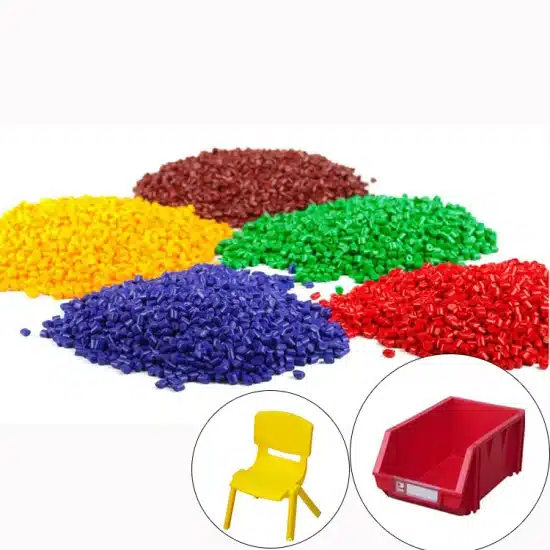
Nylon masterbatch is a concentrated mixture of pigments, additives, or both, specifically formulated to be compatible with nylon (polyamide) resins. It is used in the manufacturing of nylon-based products such as textile fibers, engineering components, automotive parts, and industrial equipment.
Unlike standard masterbatches, nylon masterbatch requires a carrier resin that can withstand the high processing temperatures typical of nylon applications, often above 260 degrees Celsius.
Why Nylon Masterbatch Is More Challenging to Formulate
Nylon is a hygroscopic material, meaning it absorbs moisture. This creates unique challenges during masterbatch production and processing:
• Moisture can cause degradation and surface defects
• Pigments must be heat-stable at high processing temperatures
• The carrier resin must be fully compatible with the nylon grade used
• Additives like UV stabilizers and lubricants must be carefully selected
• Dispersion quality must be extremely high to prevent streaking
Key Applications of Nylon Masterbatch
• Textile fibers and yarn (for coloring nylon fabrics)
• Automotive under-the-hood components
• Electrical connectors and housings
• Industrial gears and mechanical parts
• Sports equipment and consumer goods
Here is a comparison of nylon masterbatch types commonly offered by masterbatch companies:
| Type | Key Feature | Typical Application | Processing Temp |
| Color Masterbatch | High pigment concentration | Fibers, films, molded parts | 240–280°C |
| UV Stabilizer MB | UV protection additive | Outdoor nylon components | 240–270°C |
| Flame Retardant MB | Reduces flammability | Electrical housings | 240–275°C |
| Anti-Static MB | Dissipates static charge | Electronics, packaging | 230–270°C |
| Lubricant MB | Improves flow and mold release | Precision engineering parts | 240–280°C |
How to Evaluate a Masterbatch Company for Nylon Products
• Check if they have specific experience with polyamide (nylon) resins
• Ask for heat stability test data for their color masterbatches
• Confirm that their facility handles moisture-sensitive materials correctly
• Request sample batches for your specific nylon grade
• Look for companies that offer technical co-development support
Common Mistakes to Avoid
• Using a general-purpose masterbatch not designed for nylon
• Ignoring drying requirements for nylon before processing
• Choosing a supplier based only on color match without checking thermal stability
• Not specifying the exact nylon grade when requesting formulations
Best Practices When Using Nylon Masterbatch
• Always dry the nylon resin and masterbatch before processing
• Use the recommended let-down ratio specified by your masterbatch company
• Conduct color trials before full production runs
• Store masterbatch in sealed, moisture-resistant packaging
• Monitor melt temperature closely to avoid thermal degradation
Frequently Asked Questions
1. What is the typical let-down ratio for nylon masterbatch?
Most nylon masterbatches are used at a ratio of 2% to 5% depending on the desired color intensity or additive concentration.
2. Can I use the same masterbatch for PA6 and PA66?
Not always. PA6 and PA66 have different processing temperatures. It is best to use masterbatches specifically formulated for your nylon grade.
3. How do I prevent silver streaks in my nylon product?
Silver streaks are usually caused by moisture. Dry both the nylon resin and masterbatch at the recommended temperature and time before processing.
4. Does nylon masterbatch affect mechanical properties?
A well-formulated nylon masterbatch should have minimal impact on mechanical properties. Always verify with your masterbatch company’s technical data.
5. What certifications are important for nylon masterbatch used in food or medical applications?
Look for FDA compliance, EU food contact approval, or USP Class VI certification depending on your application requirements.
Conclusion
Nylon masterbatch is a specialized product that demands technical expertise and careful formulation. Partnering with an experienced masterbatch company ensures that your nylon products come out consistent, visually appealing, and functionally sound.